Understand Safari Tier Ratings & Experiences In South Africa | Why Visit South Africa For Your Safari Vacation Or Holidays In Africa
SOUTH AFRICA MOUNTAINS, FORESTS & DESERTS
1. South Africa Mountains
Ben Macdhui – Drakensberg Mountain Range
Ben Macdhui in South Africa is the highest peak in the Eastern Cape Province and is named after a pinnacle of the same name in Scotland. The 3001 m-high mountain near the small, charming historical town of Rhodes forms part of the Drakensberg Mountain Range and is the only place in the country where organised skiing is possible. Snow can fall at any time of the year and the area is known as the Switzerland of South Africa for good reason. It is also home to the country’s only ski resort – Tiffindell. The Tiffindell Ski Resort on Ben Macdhui Mountain offers snowboarding and skiing for three months of the year and partly relies on one of the most advanced snowmaking systems in the world to supplement winter snowfall from May to September. The resort offers skiing and snowboarding lessons and can accommodate 130 overnight visitors and an additional 200 day visitors on its 600 m-slope. The Tiffindell Ski Resort also offers wonderful summer activities like grass skiing, mountain biking, fly fishing and high altitude hiking. Those looking for a bit of warmth and entertainment will find it in the highest pub and restaurant in South Africa. But the whole family can find something exciting to do on this Eastern Cape mountain range. The resort is situated about 200 km east of Aliwal North in the and also offers scenic 4×4 trails. Rich plant and animal life makes the area fascinating to explore. Avid hikers can explore the mountain via the Ben Macdhui Hiking Trail, which winds its way along the southern side of the peak. The highest overnight hut in South Africa – the Hooggenoeg (‘high enough’) overnight hut at 2 535 m – can also be found on South Africa’s Ben Macdhui. The hike last for four to five days and is moderately difficult. Hikers must take care to be well prepared and to pack enough warm clothes, even in summer.
uKhahlamba-Drakensberg Mountain Range
For mountain grandeur nothing beats the uKhahlamba-Drakensberg, the largest, longest (1 000 km) and highest mountain range (many peaks are over 3000 m) in South Africa. Meaning “Dragon Mountain” or Barrier of Spears, its mountains form the backbone of the Maloti-Drakensberg Transfrontier Conservation and Development Area between the Kingdom of Lesotho and South Africa. It’s a Ramsar site, a World Heritage Site and contains the largest and most concentrated group of San rock paintings in Africa south of the Sahara – some 600 known sites. Rich in biodiversity, 2 153 plant, 299 bird, 48 mammal and reptile species reside here including eland, sacred to the San hunter gatherers, and endangered Cape and bearded vultures. Hike its gorges; climb its peaks and frozen waterfalls; fly over its majestic amphitheatre; hang glide its sheer cliffs; or kloof its ravines (same as canyoning) views this awesome are unequalled anywhere. Here too, some of the country’s biggest rivers converge in a mountain wilderness of raptors, waterfalls and breathtaking vistas, that’s snow-capped in winter and lusciously green in summer.
Cederberg Mountain Wilderness Of The San People
Discover 162 000 hectares of pristine mountain terrain, stretching from the Pakhuis Pass in the north to Grootrivier in the south, when you visit the Cederberg wilderness. Follow in the footsteps of the ancient San and Khoi to the Stadsaal Caves in the Koue Bokkeveld, on the rock art trail, where some sites date back around 8000 years. The area is a celebrated hiking and climbing destination, loved for its solitude and rugged mountain beauty that’s rich with endemic plant life including fynbos, the rooibos tea plant, threatened Clanwilliam Cedar trees and the rare Snow Protea, found only along the snow line of the Sneeuberg. Mountain bike its rocky paths or tackle a challenging 4×4 trail; and if you’re fortunate you’ll see the rare Cape Leopard and other reserve inhabitants like porcupine, aardvark and Cape fox, along with 100 species of bird. Unforgett able though, are the fantastical rock formations this park boasts – Wolfberg Cracks, Wolfberg Arch and Maltese Cross nature’s own sculpture garden on a grand scale. Table Mountain in South Africa reaches 1 086 m at its highest point – Maclear’s Beacon – and rises above the coastal city of Cape Town in the Western Cape Province, offering stunning views over both the ocean and the city. The flat-topped sandstone natural attraction is approximately 3 km long and is one of the only mountains in the world that is nearly entirely encompassed by a metropolitan area.
Cape Town’s Table Mountain
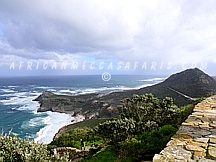
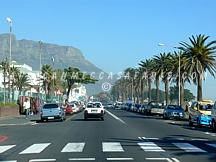
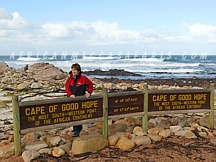
Cape Town’s Table Mountain is an internationally recognised landmark and holds special cultural and recreational allure. Approximately 1 470 species of flora, many endemic and extremely rare, like the Wild Orchid Disa and the Silver Tree, can be seen on the mountain. The Table Mountain National Park includes the Table Mountain Chain, which stretches from Cape Point in the south to Signal Hill in the north, as well as the ocean and coastline of the peninsula. The nature reserve is famous for its biodiversity due to its varied landscape, which includes sandy flats, craggy cliffs and sheer slopes. The Table Mountain National Park has three entrance points – at Boulders, Silvermine and Cape of Good Hope – where conservation fees are payable, but the park mainly offers open access and is free to enjoy. This mountain within Cape Town has about 350 recorded paths, which vary from easy to extremely difficult, meander to Table Mountain in Cape Town’s summit. For those who prefer a gentler ascent the Cableway, which carries around 600 000 visitors to the summit each year and was opened in 1929, offers a scenic ride. Visitors are advised to contact the Mountain Club of South Africa before starting any walking trail. Table Mountain in South Africa attracts mountain bikers, abseilers and climbing adventurers – enough to satisfy any adrenalin junkie. Kloof Nek Road, which is connected to Lion’s Head, offers a gorgeous panoramic views.
2. South Africa Forests
Grootvadersbosch Nature Reserve
The Grootvadersbosch Nature Reserve is where you’ll find a fascinating woodland usually referred to as the Grootvadersbosch Forest. Situated in South Africa’s Western Cape Province near Swellendam, it offers great hiking, cycling and is one of the most noteworthy indigenous forests in the region. This 250 hectare forest gets its name from the owner of the original farm – Melkhoutskraal – where it is located. Mr. Roelof Oelofse, who was known as a Groot Vader – or great father – was given the farm in 1723 and the owners that followed him were also given the title. The reserve was declared a wilderness area in 1978 and the Grootvadersbosch Nature Reserve was protected under CapeNature from 1986. It was declared part of a UNESCO World Heritage Site in 2004. This unique and stunningly beautiful forest offers a peaceful atmosphere, rich bird life, mountain fynbos and Knysna high forest. Typical forest trees like ironwood, red alder, yellowwood and stinkwood abound and areas covered by exotic trees that were planted here up to 1913 are being reclaimed to expand the indigenous forest. The Grootvadersbosch Nature Reserve and forest are about 22 km from Heidelberg and accommodation can be found at the reserve or in Swellendam. The Boosmansbos Wilderness area also lies between Heidelberg and Swellendam and offers a fantastic, relatively undiscovered experience of the Langeberg Mountains. Only 267 km east of Cape Town this hikers’ paradise offers everything from rugged mountains to delicate fynbos and is well worth a visit for its quiet and unique beauty and bird watching.
Ndumo Fever Forest
The Ndumo Fever Forest , found in the Ndumo Game Reserve in the KwaZulu-Natal province, is distinguished by its greenish-yellow fever trees and incredible bird life. Over 400 avian species, some very rare, inhabit the forest’s fertile and lush environment. The reserve itself covers over 10 000 hectares and incorporates the forest as well as various wetlands, lakes and pans north of Pongola. The Fever trees for which the forest is famed were named so due to the inaccurate belief that they caused malaria. The real culprit, the mosquito, is also prevalent in the forest, with no less than 66 different recorded species found here. Entomologists, probably the only folk who can look on mosquitoes with anything approaching respect, will find much more besides mosquitoes amongst the forest’s rich insect life to thrill them for days on end. The Ndumo Game Reserve is also home to many crocodiles and hippos as well as the endangered white and black rhino, impala, buffalo and the rare nyala antelope. Various waterfowl, such as egrets, pelicans, Pygmy geese and Pell’s Fishing Owl add to the attraction.
The Ongoye Forest
The Ongoye Forest Reserve stretches along the coast of Zululand between the small towns of Eshowe, Empangeni and Mtunzini, approximately 150 kilometers from Durban. A bird watchers paradise, the forest shelters an impressive 605 different species of our feathered friends, many of them rare and endemic, amid lush forest punctuated by open grassland. It is the only place in Southern Africa where the rare Woodward’s (Green) Barbet can be seen. The 3 900 hectare forest is incredibly rich in plant life ranging from temperate to tropical climate varieties. The endemic animal, bird and plant life are among this KwaZulu-Natal forest’s great attractions and visitors can feast their eyes on massive, near-extinct Wood’s cycads and Pondoland Fig trees. Feathered treasures are the highlight here though, and the diversity of terrain means you’ll spot raptors above the tree canopy, ground hornbills in the grasslands, and anything from threatened Spotted Ground-Thrushes to rarely seen Narina Trogons along trails through the forest. Nature lovers can explore the area by 4×4 or meander their way through this lush environment on foot with an experienced guide. En route, look out for Samang o monkeys, baboons, mongooses, thick-tailed bush babies, dwarf chameleons, and the elusive blue duiker. This forest in KwaZulu-Natal is unique in that it provides virtually unrestricted access to unspoiled natural bounty. Visitors can help to maintain this valuable eco-system by taking special care not to damage the environment. The community surrounding the forest use it as a primary resource and they are actively involved in helping protect and maintain the natural beauty and value of this incredible forest. Bird lovers will be hard pressed to find a more diverse and amazing environment to indulge their passion.
The Dlinza Forest
The Dlinza Forest is found outside the small town of Eshowe and is one of 2 beautiful indigenous forests in this section of the KwaZulu-Natal province. The 250-hectare forest, established in 1947, is crisscrossed with walking trails, but the most fun way to explore this natural attraction is via its 10-metre high aerial boardwalk. The Dlinza Forest aerial boardwalk is especially popular among bird watchers and rare species such as the Spotted thrush and Delegorgue’s pigeon are amongst those that can be spotted. Butterflies also abound in autumn with 70 recorded species, including the Mocker Swallowtail, Mother of Pearl and Gaudy Commodore. Though filled with rare plants and birds, the forest’s most endangered citizen is the Dlinza Forest Pinwheel, a snail that only occurs here. This forest in KwaZulu-Natal has extensive picnic facilities and walking trails, but can also be explored by car on the Royal Drive, which passes through the middle of the forest. Visitors can learn more about local plants and their medicinal uses from plaques dotted throughout the forest, filled with fascinating facts. The early morning is an especially good time for a meander as the forest’s many birds and frogs create a mesmerising cacophony of sound. The town of Eshowe sits at the centre of the Zululand Birding Route and the Dlinza Forest certainly does the area justice. The forest is rare in that it is situated within an urban area making accommodation easy to find. Children can play in the forest and clamber along the wooded walkway while looking out for Vervet monkeys and a pair of Crown eagles that nest here
Musina Nature Reserve
The Musina Nature Reserve is home to South Africa’s largest collection of baobabs. These magnificent trees can attain a circumference of 28 meters, and grow 25 meters high. Living for anything up to 3 000 years, they have become cloaked in folklore, and legends abound as to their mysterious powers. Perhaps the strange ‘roots in the air’ shape has inspired the legends. Maybe it’s the incredible half-millennium-plus life spans, or the fact that the many of these trees have hollow centers large enough to accommodate up to 40 people. Or it may be because when the end comes for a baobab, they rot from the inside until one day they suddenly collapse and disintegrate. From a distance, it seems that the tree has simply disappeared.
Tsitsikamma Forest
The Big Tree in the Tsitsikamma Forest stretches its distinctive Yellowwood leaves skywards, towering over the other trees in the canopy. This oldest of the Tsitsikamma yellowwoods is estimated to be between 600 and 800 years old, and is well worth a special visit. Some of the trees felled for their pale, unblemished wood were over a thousand years old, and now, the largest remaining yellowwood is doesn’t even approach this venerable age. The Big Tree in Tsitsikamma forest, near Plettenberg Bay, can be visited to catch a glimpse of the majesty that once ruled the forests.
3. South Africa Deserts
Karoo Desert Botanical Garden
The first thing likely to strike you when you are inside the Karoo Desert National Botanical Garden is the sight of the Quiver tree as it soars into the air, dwarfing all other succulent species around it. This beautiful desert tree is in its natural habitat here. Taste one of its young buds and you will immediately recognise the taste of asparagus. If you would like to grow one in your garden, seeds are available at the garden’s shop. The Botanical Garden in the Karoo is situated 3 km north of the town of Worcester, some 120 km from Cape Town. To experience the best of the Karoo Desert Botanical Garden, make sure you are here in spring (August to end of October), when the multitudes of vygies (mesembs) are flowering. The scenery is dazzlingly colorful as these small plants show off their best colors. The Khoisan Kookskern inside the garden will acquaint you with the various plants used by the Namakwaland people, whether for medicine, cooking or other uses. For a taste of the entire legendary Karoo, follow the Karoo Trail and experience each illustrated region. Apart from the nearly 70 species of birds around, you will be able to spot the Cape Grey duiker, among other mammals.
Namaqualand’s Desert Flowers
Namaqualand’s desert flowers are one of the most incredible spectacles in the world. This arid desert area bursts into a spectacular and seemingly endless carpet of flowers come spring this vast bloom happens roughly between August and October, depending on weather patterns due to dormant seeds that lie in the dry earth for months waiting for the rains to descend. The area stretches for approximately 500 kilometres north up the Cape coast and for 100 kilometres inland, and for most of the year it seems to be a dusty, flat and bleak semi-desert with diamonds as its only jewels. But then, seemingly overnight, it becomes a veritable ocean of colour and scent. Approximately 4 000 species of plants can be found here amongst the desert flowers of Namaqualand. Strange plants, such as the Namaqua Halfmens, dot the landscape, adding to its drama, while parks, like the Goegap and Hester Malan nature reserves, protect this unique and gorgeous landscape where more than 30 of South Africa’s succulent plant species grow.
Central Karoo
The Central Karoo may seem bleak to many who drive through it on the long stretch between Cape Town and Johannesburg, but this arid environment holds many natural and archaeological treasures. This fascinating area lies between the Upper Karoo and the Klein Karoo and is home to some of the most important Stone Age sites and Khoisan petroglyths in the world. Most of these sites can be found near Nelspoort and Beaufort West in the Central Karoo of South Africa and are utterly fascinating. South Africa’s first mountain pass, the small but impressive Molteno Pass, can also be found outside the charming town of Beaufort West and was built by the master of mountain passes, Thomas Bain. Beaufort West is the oldest town in the area, proclaimed in 1818. The Central Karoo is dotted with many small and charming towns that are famed for their hospitality and historical significance. Prince Albert, for example, has its own special character focused on unique architecture and excellent traditional food. Guided tours through the Swartberg Pass at Prince Albert are also available, as are visits to Gamkaskloof. The Central Karoo climate is generally arid and gets little rain; what does raind falls does so mainly in summer. Winters are dry and cold while summers can get blazing hot.
CONTACT AN EXPERT TO PLAN YOUR SOUTH AFRICA SAFARI